

She sold out by noon. That should have been a good day.
By evening she was counting the money and frowning. The cash was there, but after the next batch of materials, the transport, and the airtime used taking orders, almost nothing was left. She had worked all day and paid herself nothing. The problem was not the selling. The problem was the price — and the price was wrong because the cost was never worked out properly.
If you sell anything — food, soap, candles, clothes, baked goods, crafts — this guide is for you. It shows how to calculate product cost in plain steps, with a worked example you can copy, so you can set a price that covers the real cost and still leaves profit. No accounting degree needed. A notebook, a calculator, and honest numbers will do.
Table of Contents
The idea to hold on to
Product cost is not the price of the main material. It is everything that goes into making and getting one item ready to sell, including a fair share of the costs you pay whether you sell or not, and including your own time. That full picture is how to calculate product cost properly.
Leave one part out and the price will look fine until the month ends. Leave your time out and you will build a business that only works if you work for free. Neither is sustainable.
So count five things, every time, for every product: materials, time, packaging, overhead, and delivery or selling costs.
What product cost really includes
Materials are what goes into one item, measured properly. For a candle, that is wax, wick, fragrance, and container per candle — not the price of the whole bag of wax. For a food item, it is the flour, sugar, oil, and packaging in one portion. Weigh or count where you can. Guessing per-item amounts is how small costs hide.
Your time is a cost even when no one pays you a salary yet. Decide on an hourly rate for costing purposes. This is an EXAMPLE rate you choose to test your price. It is not a wage law and it is not what anyone must pay. If you leave time out, a product that takes an hour to make will look cheap, and you will pay for it in unpaid hours.
Packaging is the jar, box, bag, label, and sticker the customer takes home. Each piece looks small. Added up per item, packaging is a real amount, and forgetting it is one of the most common costing mistakes.
Overhead is what keeps the business running: rent or a share of household costs for your workspace, electricity, gas, data, transport to buy materials, phone costs for orders, and wear on tools. You do not put a whole month’s rent into one candle. You share it out, as shown below.
Delivery and selling costs happen when you sell: transport, delivery fees, market stall fees, payment charges, or platform fees. Count them per sale. Fees change, so check the current fee with the provider before you rely on it. Do not copy a fee from an old post.
The simple formula for how to calculate product cost
Write this down and keep it where you work:
Unit product cost = (Materials per item + Labour per item + Packaging per item + Overhead share per item) + Delivery/selling cost per item
Getting honest numbers for each line is the work. Do one product at a time. Take care when you learn how to calculate product cost.
For the overhead share, use this method:
Overhead share per item = Total monthly overhead ÷ Number of items you expect to make and sell that month
Worked example: a handmade candle (EXAMPLE numbers)
These are round, illustrative EXAMPLE numbers to show the method. They are not real market prices. Replace every number with your own actual costs.
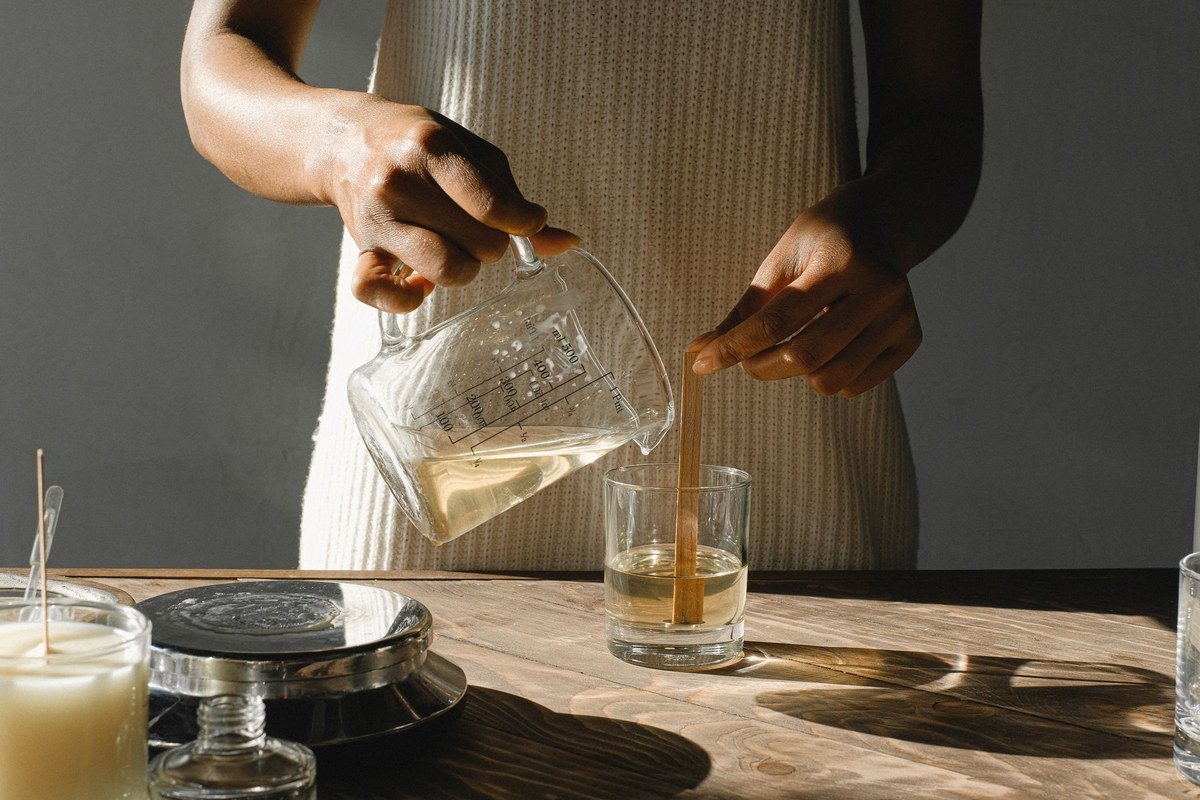
Imagine you make candles in small batches at home. One batch makes 20 candles.
- Wax, wick, fragrance, and container for the batch: 4,000 (currency units for this example)
- Your time: 5 hours for the batch, at an EXAMPLE rate of 400 per hour = 2,000
- Packaging for the batch (labels and bags): 400
- Monthly overhead: 3,000 for the month, and you expect to make 60 candles that month, so the overhead share is 3,000 ÷ 60 = 50 per candle
Per candle, that gives:
| Cost line | Per candle |
|---|---|
| Materials (4,000 ÷ 20) | 200 |
| Labour (2,000 ÷ 20) | 100 |
| Packaging (400 ÷ 20) | 20 |
| Overhead share | 50 |
| Unit product cost | 370 |
So one candle costs 370 in this EXAMPLE, before delivery. If delivery for a one-candle order costs 100, that sale’s full cost is 470. If the same delivery carries five candles, delivery per candle is 20 and the full cost is 390. The same product can have a different full cost depending on how it is sold — which is why delivery must be counted per sale, not guessed once and forgotten.
The method is the same in naira and in rand. Only your own numbers change.
From cost to selling price: markup is not margin
Markup and margin sound alike. They are not the same, and mixing them up quietly eats profit.
Markup is profit added on top of cost. Cost 370 with 30% markup: 370 + (30% × 370) = 370 + 111 = 481.
Margin is profit as a share of the selling price. For a 30% margin: 370 ÷ (1 − 0.30) = 370 ÷ 0.70 = 529 (rounded). The same 30% gives a different price, so decide which one you are using and write it down.
Start by adding the profit you want in plain numbers — “cost + 150” — and check the result against what similar items sell for near you. If the price is far above what people pay, lower the cost or change the product; do not pretend the cost is lower than it is.
Do not copy a competitor’s price without knowing their cost, do not forget small costs like labels, data, and message time, and do not change the price mid-day because one customer haggles. Set it, write it down, and review it weekly. Keep business money separate from personal money — see the Start a Business category for a simple way to do this.
A costing worksheet you can copy
Use one sheet per product, with your own numbers — not the example above. Repeat the same steps whenever you need to work out how to calculate product cost again.
| Line | Your number | Notes |
|---|---|---|
| Materials per item | Weigh/count per item | |
| Labour per item (hours × your EXAMPLE hourly rate) | Include packing time | |
| Packaging per item | Jar/box/bag/label total | |
| Overhead share per item | Monthly overhead ÷ expected items | |
| Unit product cost | Add the four lines above | |
| Delivery/selling cost per item | Per order, shared if needed | |
| Full cost for this sale | Unit cost + delivery/selling | |
| Selling price | Cost + profit you chose | |
| Profit per item | Price − full cost |
Do your best-selling product first. After a month, compare estimated costs with what you actually spent and update the sheet.
Redo the calculation when material prices, suppliers, batch sizes, or delivery fees change, and monthly for your main product. Small rises, one at a time, are easy to miss. For selling without misleading claims, read the Sales & Marketing category. Repeat the check each time you need to work out how to calculate product cost after a price change.
Frequently asked questions
How do I calculate product cost for a handmade product?
Add materials, labour, packaging, and overhead share per item, then add delivery or selling cost per item. Use the formula and worksheet in this guide, with your own actual numbers, and redo it when costs or batch sizes change. That is how to calculate product cost for one item, in plain steps.
Should I include my own time in product cost?
Yes. Use an hourly rate for costing purposes and count making and packing time. Otherwise the business only works while you work for free.
Registration and tax rules in Nigeria (CAC and the relevant tax authority) and South Africa (CIPC and SARS) change, so check the current information on the official websites before you act. This guide states no fee or threshold as a current fact.
EducationNGr is not a bank, CAC agent, or investment adviser. This guide is general education only. Check the official source before you act, and keep your own records. For day-to-day money, records, and stock, see the Business management category, and for idea help, see the Business Ideas category. If this guide helped, tell us through the Contact page or read the About page and the Disclaimer.